
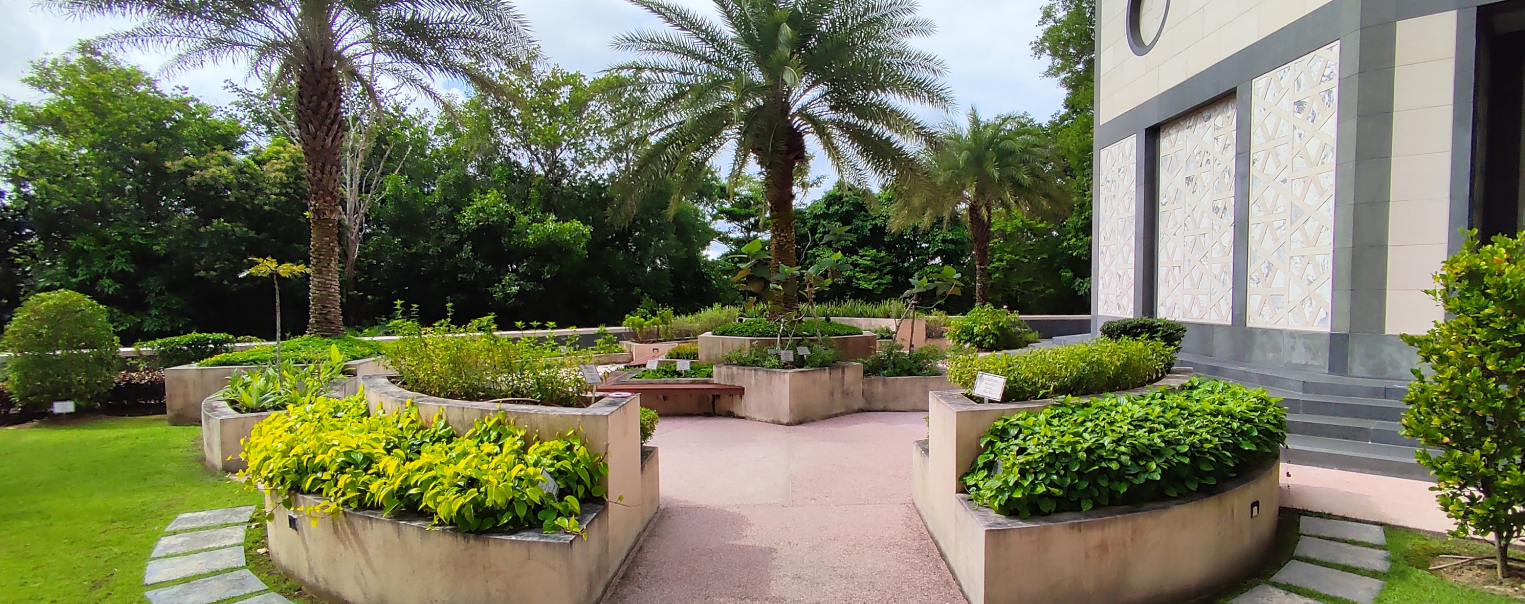
ARECA CATECHU

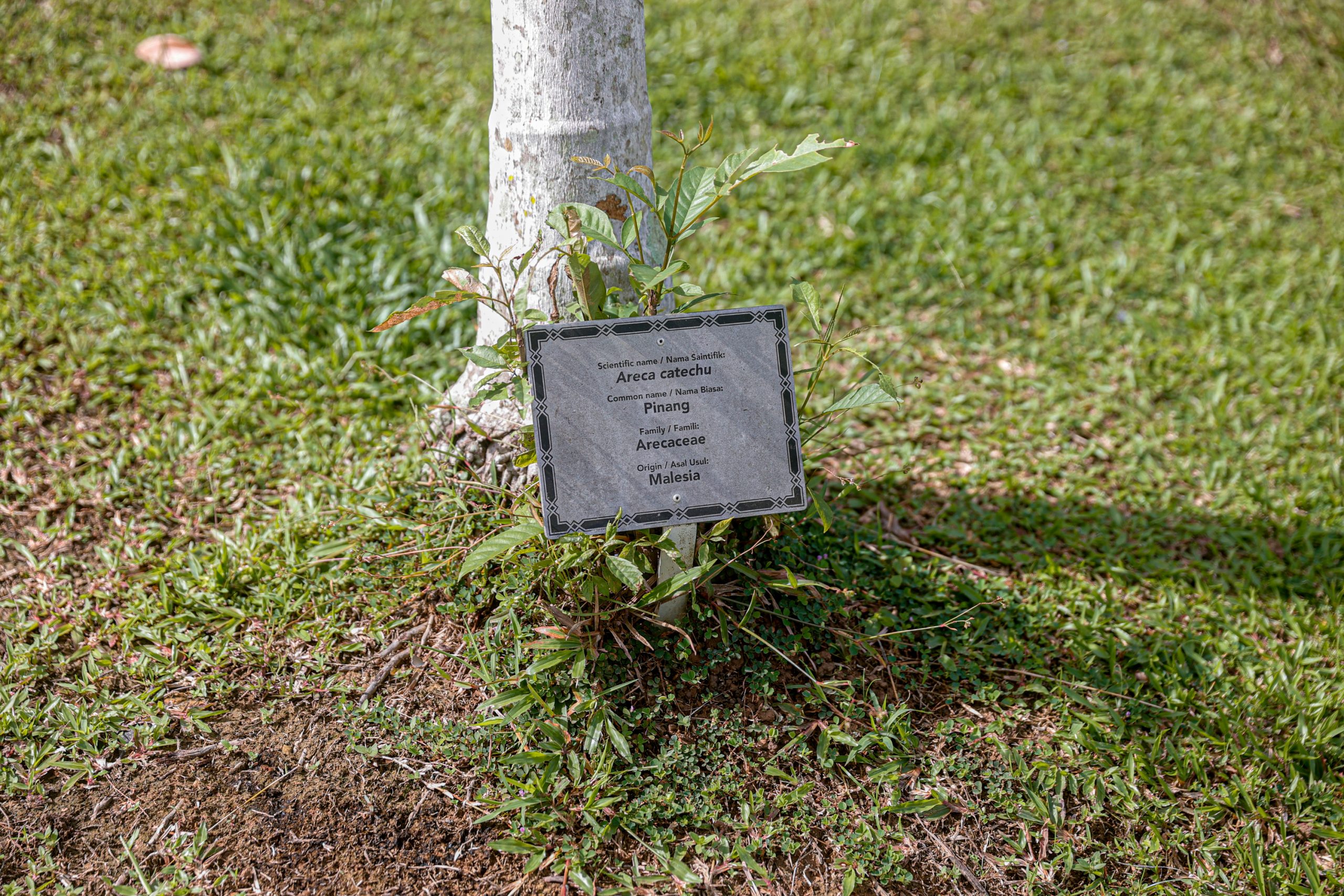
Areca catechu, is a handsome single-stemmed, tropical palm with broad, glossy green, feather-shaped leaves that protrude from a green crownshaft and has a narrow, upright habit. The leaves are fronds arching, semi-erect, pinnately-compound with 30-50 leaflets, curving inward with age with a few lowest leaflets often hanging, up to 2 m long. Their fruits is ovoid, orange to scarlet when ripe with fleshy and fibrous layer, single-seeded, 5 to 10 cm long. Betel nut, one of its common names, is misleading when the leaves of Piper betle (commonly known as betel) are often chewed together with the plam’s nut and edible lime. Thus, by association, it has been conviniently known as betel nut.
Taxonomy:
- Family : Arecaceae (Palmae)
Common Names:
- Malay : Pinang
- English : Betel-nut palm, Betel palm
Habitat and Distribution:
Areca catechu is thrive in tropical regions. It is native to Malesia.
Uses:
- Seed (nut) : is chewed by the natives and it stains the lips and teeth red, with the excrement being hot and acrid. Seed (nut) is aromatic and astringent, and can be addictive. It is used against anaemia, fits, leucoderma, leprosy, and obesity, and is also a purgative and an iontment for nasal ulcers. In India, the nut has been used to treat tapeworms.
- Flowers : Traditionally, the flowers are used in medicines as charms for the healing of the sick in Borneo.
- Husk fibres : has been used to make thick boards, fluffy cushions and non-woven farbric, while the stems were useful building material in the villages and have been widely used for a variety of construction purposes.
- Tannins : Tannins are found in betel nut, were traditionally being used for dyeing clothes, as adhesives in plywood manufacture, and for tanning leather for home use.
- Leaves : Leaves of the betel nut can be used as a fermentation stimulant in industrial alcohol production.